
How to Care for Dental Implants to Prevent Bone Loss
We often view dental implants as the ultimate "fix-it-and-forget-it" solution for missing teeth. While these restorations offer incredible durability and mimic natural teeth, neglect can still lead to problems. Bone loss around the implant site poses one of the most critical threats to your new smile’s longevity.
Unlike natural teeth, implants depend entirely on the surrounding bone for stability. When bacteria invade the gum tissue around an implant, peri-implantitis develops as an inflammatory condition that destroys bone. If unchecked, this process loosens the implant and causes it to fail.
You need to shift your approach to oral hygiene to protect your investment. You might believe that because implants are artificial, they don't need the same level of care as natural teeth. That misconception puts your implants at risk. The tissue seal around an implant differs slightly from that of a natural tooth, so it becomes more susceptible to bacterial infiltration if plaque accumulates.
We want to guide you step by step so you maintain healthy bone structure. When you follow a rigorous care routine, you help your dental implants stay strong and functional for decades.
Master the Art of Plaque Control
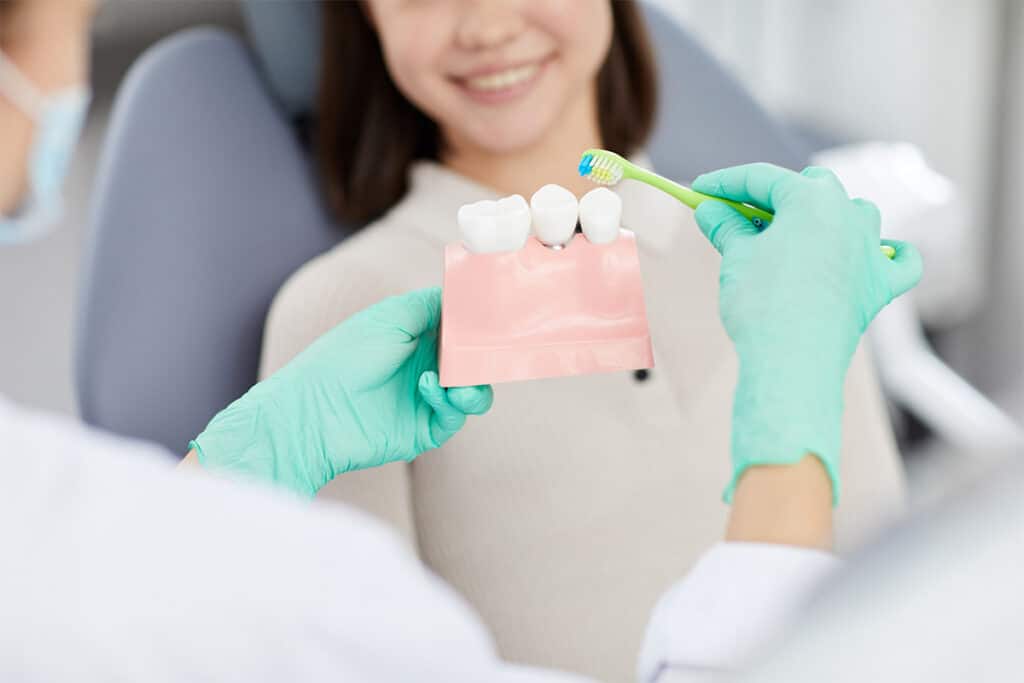
Biofilm, commonly known as plaque, poses the primary threat to bone stability around an implant. Plaque that sits on the gum line triggers an immune response. Your body sends inflammatory cells to fight the bacteria, but chronic inflammation destroys the bone supporting the implant. We cannot stress enough the importance of mechanical plaque removal. Although brushing twice a day remains standard advice, implant care requires a more targeted approach. Angle your toothbrush at 45 degrees toward the gum line to sweep away bacteria hiding in the small sulcus (space) between the implant crown and the gum.
Tools for Effective Cleaning
The right tools make a significant difference in how effectively you remove plaque. We recommend specific instruments designed to navigate the unique contours of implant restorations:
- Soft-Bristle Toothbrushes: Hard bristles can scratch the surface of the implant crown or abutment, creating rough spots where bacteria can thrive. Always choose soft or extra-soft bristles.
- End-Tuft Brushes: These small, specialized brushes have a focused head that reaches difficult areas, specifically the lingual (tongue-side) surfaces of implants where plaque often accumulates unnoticed.
- Interdental Brushes: These are crucial for cleaning the wider spaces often found between implants and natural teeth. Choose wire-free options, as metal wires can scratch the titanium surface of the implant, potentially encouraging bacterial adhesion.
Consistency remains essential. When plaque hardens into tartar (calculus), only a professional can remove it—your toothbrush cannot handle the job. Tartar creates a rough surface where even more plaque grabs hold, which accelerates the inflammatory process and leads to bone loss.
Flossing Techniques Specific to Implants
Many patients struggle to floss around implants because the shape of the implant restoration differs from a natural tooth root. A natural tooth is wider at the crown and narrows toward the root, while an implant usually features a narrower "neck" before flaring out at the crown. This shape creates a small undercut area where food and bacteria easily get trapped. Standard flossing—snapping the floss between teeth and pulling it out—won’t work for implants. Instead, use a "shoe-shine" motion to wrap the floss around the implant post and clean thoroughly beneath the gum line.
Utilizing Water Flossers
Many of our patients find traditional floss challenging to maneuver, especially with full-arch bridges or posterior implants. In these situations, we rely on water flossers as invaluable tools. Water flossers use a pressurized stream of pulsating water to flush out debris and plaque from deep periodontal pockets that string floss cannot reach.
- Pressure Settings: When using a water flosser around implants, we advise starting on a low to medium setting to avoid damaging the delicate seal of tissue around the implant (the peri-implant seal).
- Specialized Tips: many water flosser brands offer "plaque seeker" or orthodontic tips specifically designed to scrub around prosthetics while flushing.
- Antimicrobial Additives: For an extra layer of protection, you can add a non-alcoholic mouthwash or a diluted antimicrobial rinse to the water reservoir, helping to reduce the overall bacterial load in your mouth.
Monitor and Manage Lifestyle Factors
Your daily habits outside the bathroom strongly impact the health of your jawbone. Smoking, for instance, stands as one of the leading risk factors for implant failure and bone loss. Nicotine constricts blood vessels and reduces blood flow to the gums and bone. As a result, the tissues receive less oxygen and fewer nutrients, which makes it harder for your body to repair itself and fight infection. If you smoke, you significantly increase your risk of developing peri-implantitis. We always urge patients who smoke to enroll in cessation programs when considering or maintaining implants.
Controlling Systemic Health
Systemic health issues, especially uncontrolled diabetes, wreak havoc on bone density and healing. High blood sugar levels weaken your immune function, which makes you more susceptible to infections like peri-implantitis.
- Glycemic Control: If you have diabetes, maintaining steady blood glucose levels is essential for preserving the bone around your implants.
- Grinding and Clenching: Bruxism (teeth grinding) places excessive force on implants. Since implants lack the periodontal ligament that provides shock absorption for natural teeth, this force is transferred directly to the bone. Over time, this trauma can cause micro-fractures in the bone and subsequent bone loss. If we detect signs of wear, we will recommend a custom night guard to cushion your bite and protect the bone structure while you sleep.
The Importance of Professional Maintenance
Even with impeccable home care, you need to commit to regular professional maintenance visits. You cannot see everything happening beneath the gum line. During your visits with us, we use specialized tools and imaging to monitor the bone levels around your implants. X-rays give us a clear view of your bone height and density, so we can catch early signs of resorption (bone loss) before problems become critical. Early detection lets us offer simpler, less invasive treatments.
What Happens During a Cleaning?
You clean implants differently from natural teeth. We use resin or carbon fiber instruments instead of stainless steel. Metal scalers scratch the titanium implant surface and create rough areas where bacteria thrive.
- Deep Cleaning: We gently remove calculus deposits from the implant neck without disrupting the biological seal.
- Evaluation of Prosthetics: We check for loose screws or cement washout. Sometimes, a loose crown can cause inflammation that mimics infection. Tightening a screw or re-cementing a crown can prevent bone loss caused by mechanical irritation.
- Occlusal Analysis: We check your bite at every visit. Your bite changes over time as natural teeth shift or wear down. If the implant starts taking on too much force (occlusal overload), we may need to adjust the crown to redistribute the pressure evenly, protecting the underlying bone.
Protecting Your Smile for the Long Haul
You must actively preserve the bone around your dental implants throughout your life. Combine diligent daily hygiene, wise lifestyle choices, and regular professional visits to keep your implants healthy. Catch bone loss early, since it usually starts silently; you may not notice any pain or looseness until serious damage occurs. Stay proactive and treat your implants with the same care or even more than your natural teeth, so you protect the foundation of your smile. We guide you through every maintenance step and help you get the most out of your investment in oral health, building lifelong confidence and function.
Frequently Asked Questions About Dental Implants
Can bone loss around a dental implant be reversed?
In some cases, we can reverse bone loss if we catch it early (a condition we often call peri-implant mucositis). Improved hygiene and professional cleaning stop the progression and allow tissues to heal. However, if you develop peri-implantitis and lose a significant amount of bone, you may need surgical intervention such as bone grafting or guided tissue regeneration to restore the lost support. The extent of the damage and your overall health heavily influence the success of these procedures.
How often should I get X-rays for my dental implants?
We recommend getting X-rays of your dental implants at least once a year. Annual X-rays let us track your bone levels and compare them to the baseline images from when we placed the implant. If you have a history of periodontal disease or other risk factors, we suggest more frequent imaging to catch any changes in bone density right away.
The Ricco Dental Group provides comprehensive restorative and cosmetic dentistry to patients in Plainview, NY, and the surrounding Long Island communities. We focus on delivering personalized care that restores function and aesthetics through advanced dental technology. To schedule your consultation or learn more about maintaining your oral health, please contact us today.