
The Role of Digital Technology in Modern Restorative Dentistry
Technological advancements continue to transform our approach to dental care. Patients once associated dental visits with uncomfortable molds, lengthy waits for restorations, and uncertainty about the results. Today, digital tools help us deliver faster, more accurate, and more comfortable treatments. We seamlessly integrate these technologies into our daily practice, raising the standard of care for every patient we see.
Adopting digital workflows helps us reduce the margin for error often found in traditional methods. Digital technology streamlines every step in the process, from diagnosis to the final placement of a crown or bridge. Our use of state-of-the-art equipment means you receive durable, attractive results that support your long-term oral health.
Precision Through Intraoral Scanning
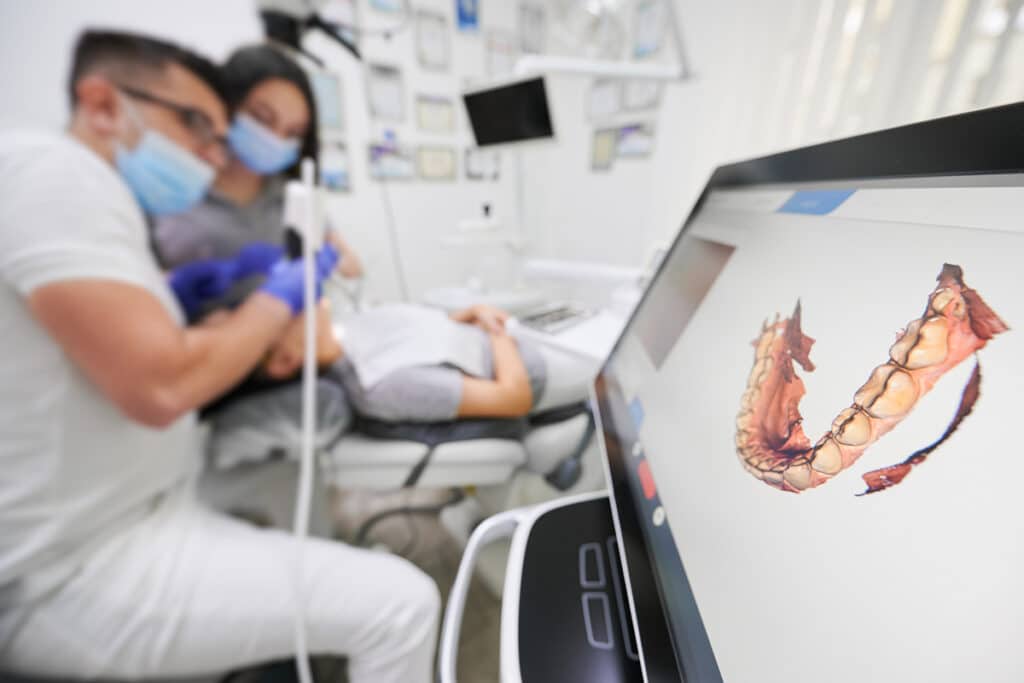
Digital impressions offer one of the most significant advancements in patient comfort. In the past, we had to use trays filled with unpleasant alginate material to take impressions. Many patients struggled with their gag reflex or disliked the taste. Now, intraoral scanners allow us to capture thousands of images of your teeth in just seconds.
We use an intraoral scanner, a compact wand-like device, to comfortably scan your mouth. It produces a highly detailed, three-dimensional digital model of your teeth and gums instantly on a screen. Digital impressions deliver superior accuracy compared to traditional molds, which can distort or form air bubbles.
Benefits of Digital Impressions
- Enhanced Comfort: We no longer use bulky trays and messy impression materials, making your experience more pleasant.
- Immediate Feedback: We review the 3D model in real time, verify our preparation, and make any necessary adjustments.
- Better Communication: You can view your teeth on our screen, helping you clearly understand your treatment needs.
- Reduced Waste: Digital files mean we avoid disposable plastic trays and impression materials, reducing our environmental impact.
The Power of CAD/CAM Technology
Computer-Aided Design and Computer-Aided Manufacturing (CAD/CAM) technology has changed how we create dental restorations. With CAD/CAM, we design and fabricate crowns, veneers, inlays, and onlays with exceptional precision. After capturing your digital impression, we use specialized software to create a restoration that fits your bite and aesthetic needs perfectly.
Upon completing the design, the software sends data to a milling machine. The milling machine shapes the restoration from a high-quality ceramic block. Your new restoration fits precisely and matches the natural translucency and strength of your original tooth.
Efficiency in Treatment
Traditional methods require sending physical impressions to an off-site lab, leaving you with a temporary crown for several weeks while waiting for the permanent one. With CAD/CAM technology, we often significantly reduce this turnaround time. In many cases, we complete the entire process much faster, reducing the number of appointments you need.
Material Durability
The advanced ceramics we use in CAD/CAM milling provide excellent strength. These materials resist chipping and cracking, so your restoration stands up to years of use. By selecting the ideal shade of ceramic block, we ensure your restoration blends seamlessly with your natural smile.
Digital Shade Matching and Esthetics
One of our primary goals in restorative dentistry is to achieve a natural look. A restoration that fits perfectly but appears artificial may affect your confidence. Lighting conditions can alter how the human eye perceives color, leading to mismatches between crowns and natural teeth. Digital shade-matching devices eliminate subjectivity from the process.
Our handheld devices examine the color spectrum of your natural teeth under controlled lighting. They measure the hue, value, and chroma of your tooth, giving us objective data. We share this comprehensive color map with the fabrication software or our laboratory technicians, ensuring the ceramic materials match your own enamel exactly.
Customization for a Natural Smile
Each tooth presents unique color gradients and varying translucency, especially near the edges. We use high-resolution digital photography and shade-matching tools to capture these subtle differences. This approach guarantees that your new crown, bridge, or veneer will look indistinguishable from your natural teeth.
The Future of Patient-Centered Care
We see technology as a direct investment in your health. Digital workflows go beyond making our work more efficient—they significantly improve your patient experience. Through these modern tools, we create a collaborative environment where you take an active role in your dental health.
When we share a high-definition 3D scan of a cracked tooth or a digital simulation of your future smile, you gain a clear understanding of your oral health. This level of transparency fosters trust and helps you feel confident when making treatment choices. We remain at the leading edge of dental technology so we can deliver safe, efficient, and long-lasting solutions for your smile.
Frequently Asked Questions About Restorative Dentistry
How does digital technology improve the fit of dental crowns?
Digital technology helps us avoid the distortion that often comes with traditional impression materials. Intraoral scanners capture precise virtual models of your prepared tooth. CAD/CAM software uses this data to design a crown with precise margins, creating a snug seal that prevents bacteria from entering. The milling machine crafts the crown according to our specifications, so we need fewer adjustments, and you benefit from better long-term protection.
Is digital X-ray technology safer than traditional X-rays?
Yes, digital X-rays typically require much less radiation than older film X-rays. Digital sensors are more sensitive to X-ray radiation, so we can lower exposure while still getting a high-quality image. In fact, digital radiography can reduce exposure by up to 90 percent compared to conventional methods. Since we can enhance and adjust digital photos on a computer, we rarely need to retake an X-ray, helping us minimize radiation even further.
We provide compassionate dental care with a focus on your comfort and health. Our team applies advanced techniques to help you achieve and maintain a functional, beautiful smile. Please contact us to schedule your appointment or discuss your dental needs.